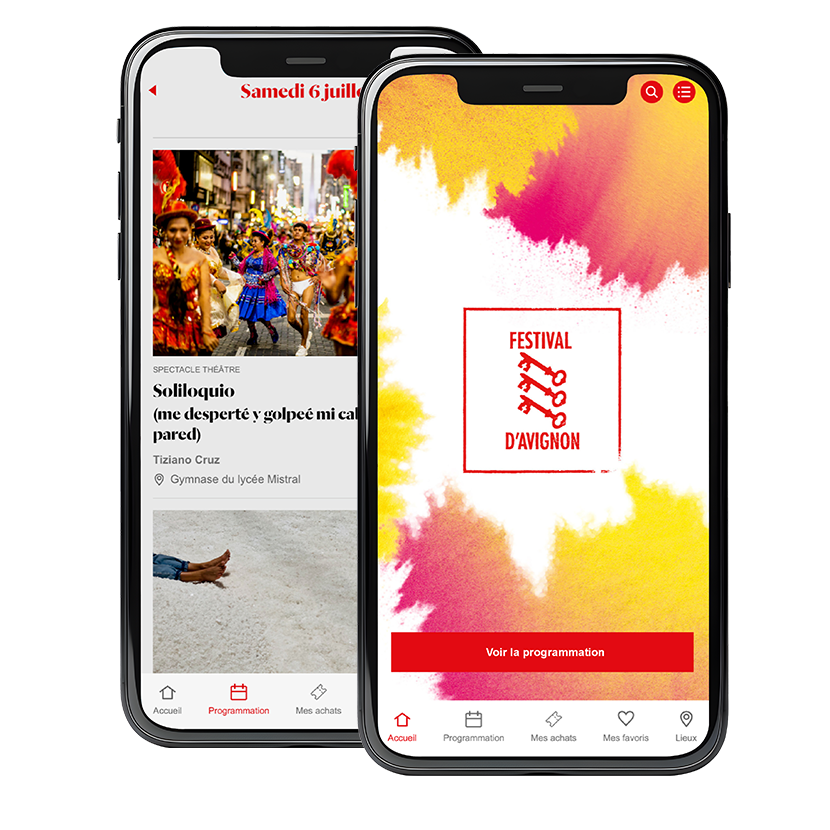

La billetterie en ligne est ouverte !
- Billetterie
Samedi 6 avril 2024
La billetterie en ligne est ouverte depuis samedi 6 avril à 13h. Une occasion d'anticiper au mieux votre venue !
Samedi 6 avril 2024
La billetterie en ligne est ouverte depuis samedi 6 avril à 13h. Une occasion d'anticiper au mieux votre venue !
mercredi 3 avril 2024
La programmation est en ligne sur notre site Internet. Vous pouvez parcourir la programmation par date, par période (en renseignant votre date d’arrivée et de départ), par catégorie (théâtre, danse, musique…) ou encore par artiste. Nouveauté : une catégorie permet de distinguer les spectacles accessibles au public hispanophone.
Mercredi 3 avril 2024
Revisionnez la présentation de la programmation par Tiago Rodrigues en direct de La FabricA du Festival d'Avignon.

Lundi 8 avril 2024
Le Festival d'Avignon recherche pour DÄMON - El funeral de Bergman d'Angélica Liddell, des figurantes et figurants, cet été en ouverture de la Cour d'honneur du Palais des papes.
Casting les 26 et 27 avril à Avignon.

Lundi 8 avril 2024
Le Festival d'Avignon recherche des participantes et participants pour CERCLES de Boris Charmatz au Stade de Bagatelle
> Participantes et participantes âgés de 16 ans et plus

Lundi 8 avril 2024
Un projet du Festival d'Avignon de la Fondation d’entreprise Hermès et de Mathilde Monnier
Transmission Impossible est un projet d’immersion, d’échange et de recherche pour des jeunes artistes, étudiantes et étudiants d’arts vivants au sein du Festival d’Avignon.